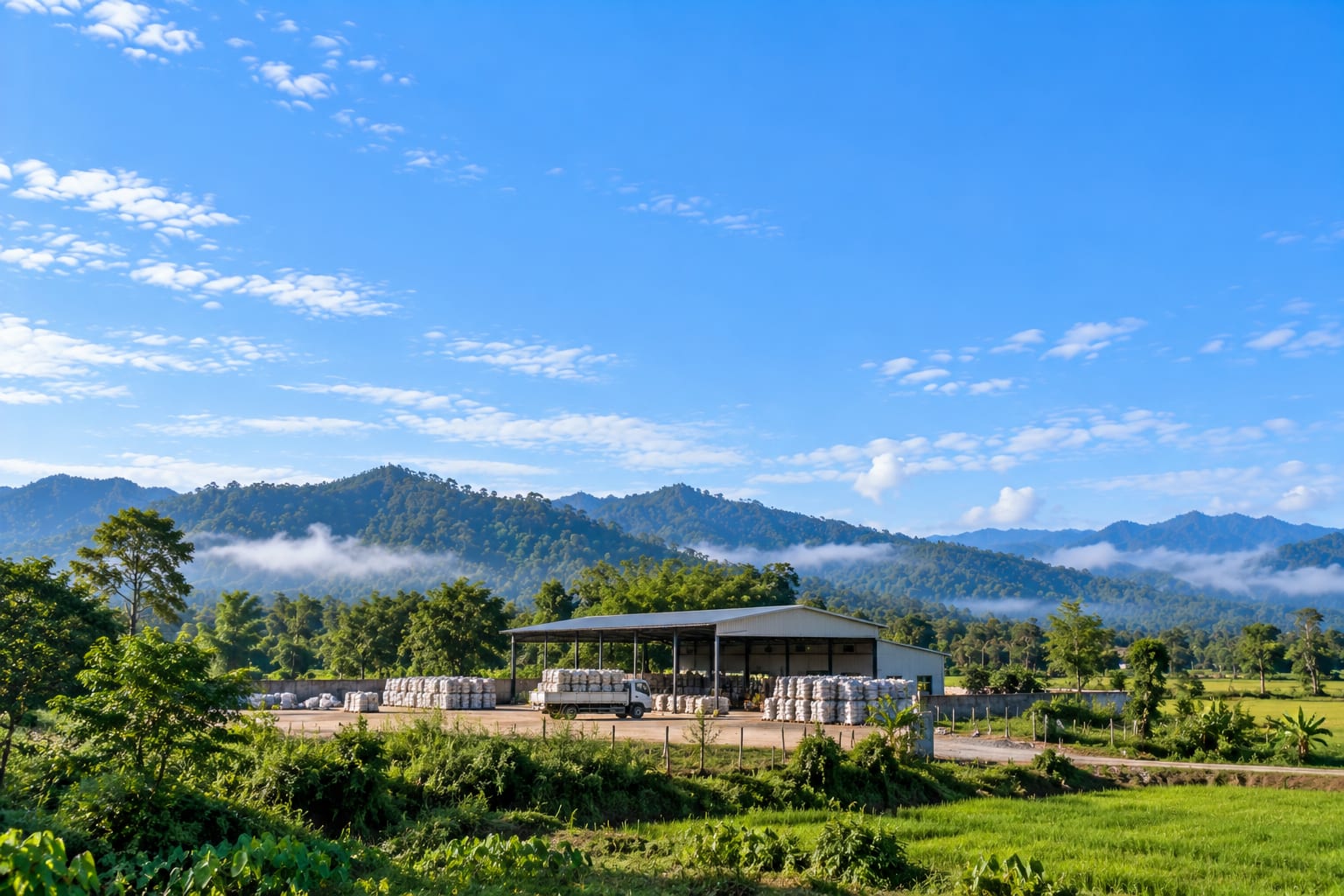
Built here
An Assam-based startup with one purpose: to organise the collection of industrial packaging waste in the North East.
/ Why we started
We saw the same thing on every site. Nobody was sure where the packaging went, nobody was tracking it, and everybody wanted it off their site.
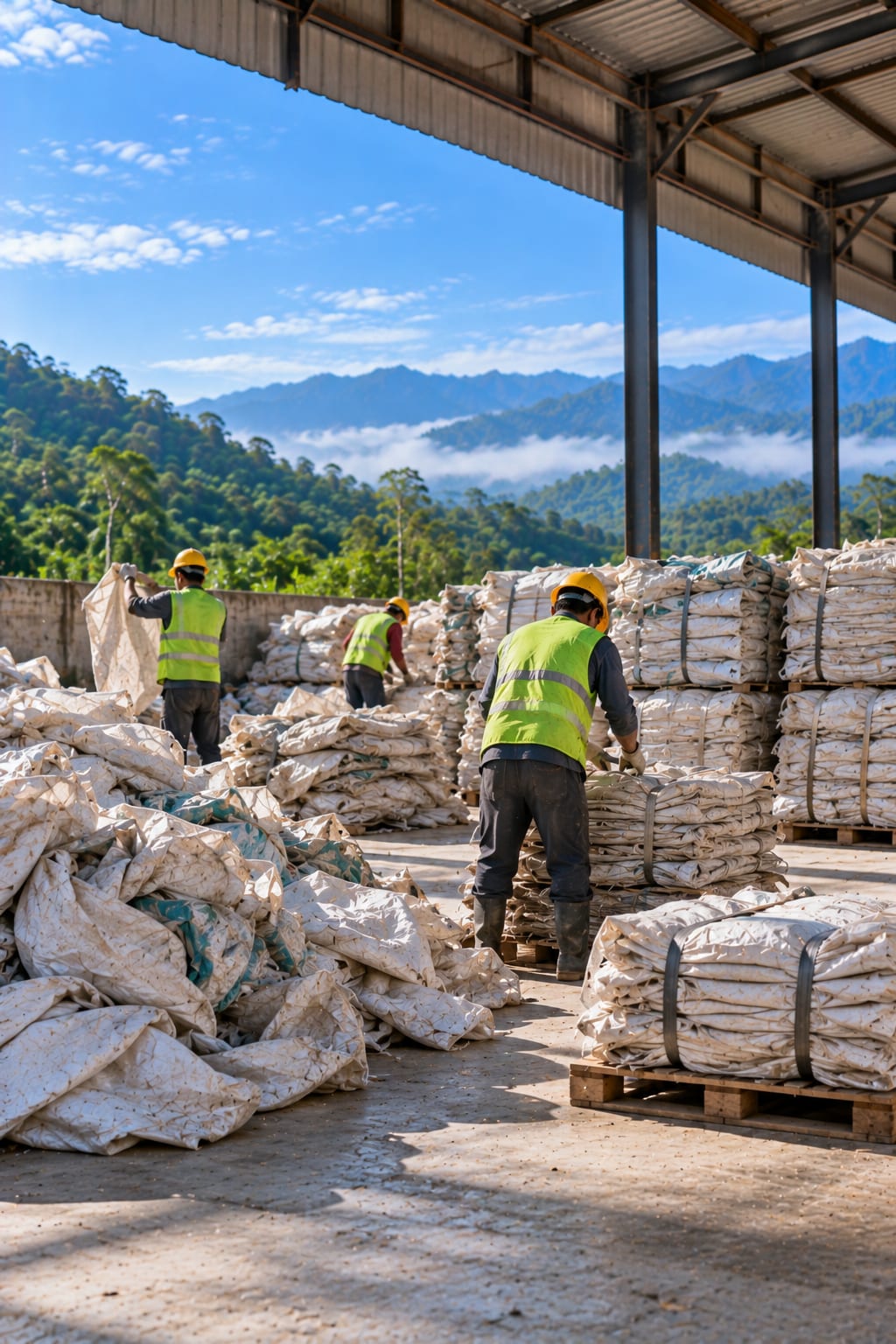
We asked contractors, cement and concrete users and factories one question: what happens to your packaging after use? The answers hardly varied.
Some of it went to scrap dealers, who took what was easy to sell. Some left with site contractors and no record. Much of it was heaped at the edge of the site and burnt, dumped in low-lying land, or carried by rain into drains and streams.
Recyclers needed steady, clean raw material. Sites were buried in used packaging. Nothing reliable connected the two, so we built it: collection points close to where the waste is generated, trained teams to sort and bundle it, our own electric trucks to move it, and the registrations and records that let a site show where its waste went.
/ Why here
The North East is fragile, and it is building fast. Both facts make uncollected packaging a bigger problem here than anywhere on the plains.
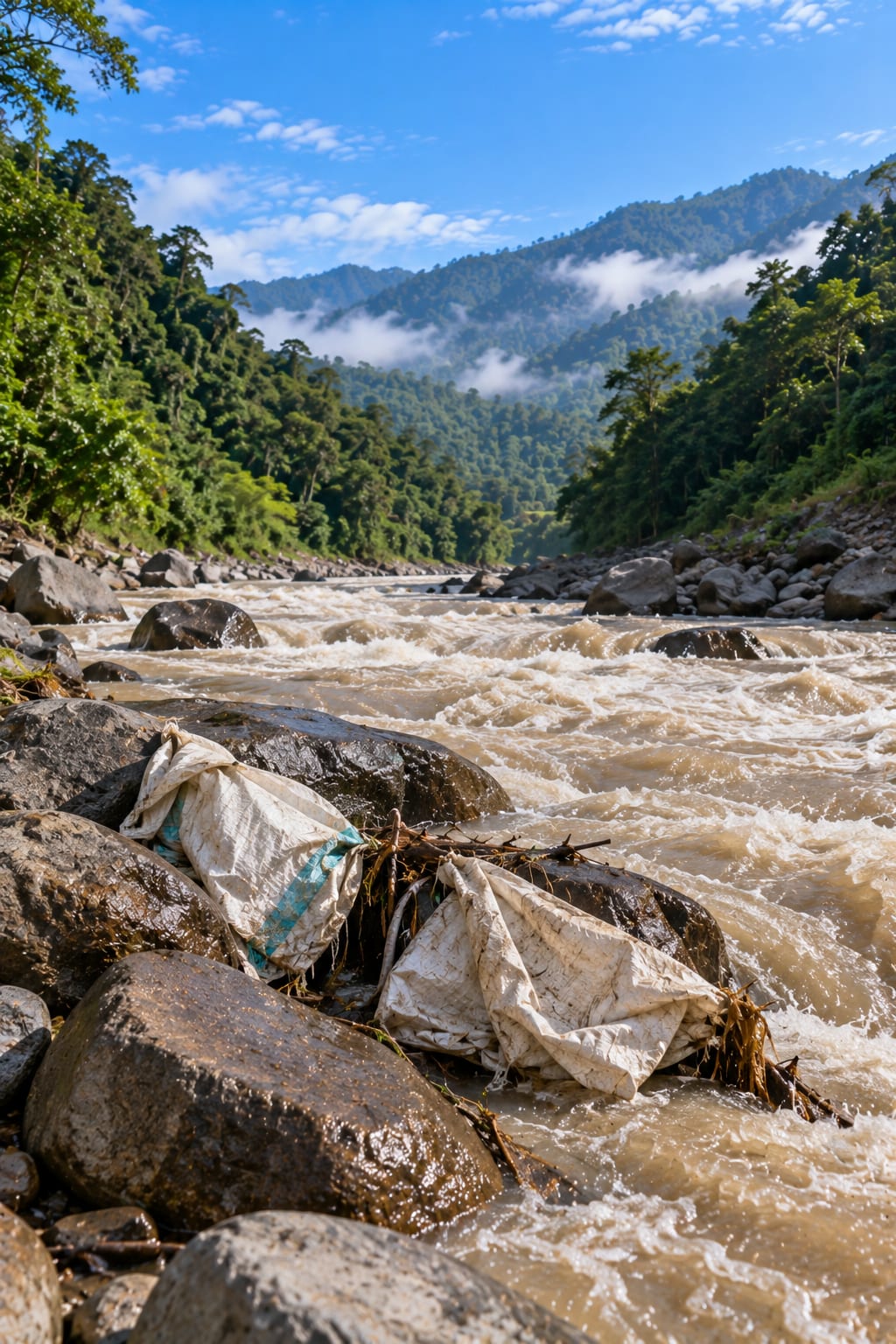
Waste travels further here
The region sits within two global biodiversity hotspots, the Himalaya and Indo-Burma. Steep slopes and heavy monsoon rain carry dumped plastic into valleys and streams within a season, and on into the Brahmaputra and Barak river systems, the wetlands and the farmland around them.
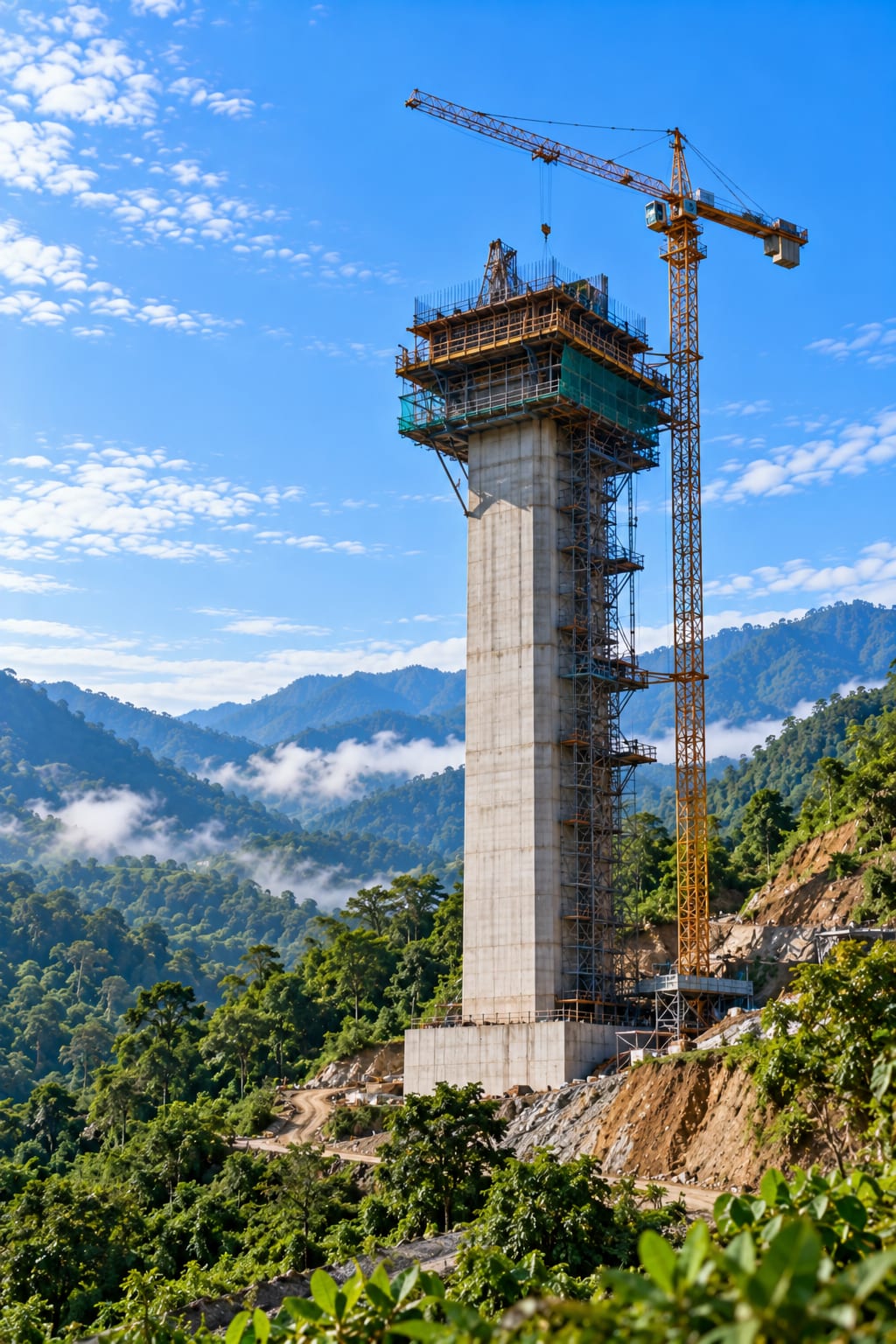
Every project adds to the stream
Highways, bridges, railway lines, dams, airports and housing are coming up across the region. That development is needed. Each project also uses cement, fly ash and chemicals, and each one leaves packaging behind. Contractors plan concrete and steel to the day. The packaging deserves a plan too.
/ What we believe
Six ideas behind how we work.
01
Waste is a resource in the wrong place
Almost everything we collect can become raw material again.
02
Collect at the source
Once packaging leaves a site unrecorded, it is almost impossible to recover.
03
Records matter as much as trucks
Every pick-up should be weighed, documented and traceable.
04
Waste work deserves dignity
Regular employment, fair wages, health cover and safe conditions.
05
Built for the North East
Hills, monsoon and distance need answers designed here, not borrowed from the plains.
06
Clean logistics
A company that exists to cut pollution should not add to it. We move waste in electric trucks.
/ Our people
A core team of 22 and a workforce of 200. Collectors, sorters, loaders, drivers and supervisors across Assam, Meghalaya, Arunachal Pradesh.

The core team handles operations, logistics, site coordination, compliance and partnerships. Many of our workers come from communities that have long depended on informal waste work, with no fixed income and no protection.
With us they have regular employment and wages, health cover, safety equipment and training for handling industrial waste. A collection system built on insecure, unsafe labour does not last. One built on skilled, protected workers can grow.
Shailen Agarwal
Director
Shwet Agarwal
Director
/ Impact
What collection changes. For the land, for the people who do the work, and for the recyclers who need the material.
Environmental
Less plastic in the hills and rivers
Packaging is recovered at the site before it is burnt, buried or washed downstream. Less of it reaches landfill, and less new plastic has to be made.
Social
Steady work in collection
People who collected waste informally get regular, protected jobs, and the sites we serve learn where their packaging should go.
Economic
Material that regains its value
Recyclers get a steady supply of sorted plastic, and what was thrown away is sold and used again within the region.
This work supports five of the UN Sustainable Development Goals: 8 Decent work and economic growth, 11 Sustainable cities and communities, 12 Responsible consumption and production, 13 Climate action, 17 Partnerships for the goals.
/ Mission and vision
Where we are headed. Over the next three years we are adding collection points and partners in our three states, filling our 5,000 tonnes a year of collection capacity and signing on more recyclers. After that we intend to take the model to the rest of the North East.
Mission
To organise, regulate and scale the collection of industrial packaging waste across the North East, so that every tonne generated at a site or plant is recovered, documented and returned to use, with secure and dignified work for the people who make that possible.
Vision
A North East where every construction site, dam, highway and factory has a regulated partner for its packaging waste, no industrial plastic is burnt in the open or washed into the rivers, and waste work is recognised as skilled and safe employment.
/ Credentials
Registered and recognised. We hold the registrations a site needs from its waste collection agency.
PCB
Pollution Control Board, Assam
Registered with the Pollution Control Board, Assam, for the handling of plastic waste.
EPR
EPR registered
Registered under the Extended Producer Responsibility framework for plastic packaging.
DPIIT
DPIIT recognised startup
Recognised by the Department for Promotion of Industry and Internal Trade, Government of India.
/ Generating packaging waste in the North East?
Tell us where your site is and what it produces. We will get back to you about collection.